Why are labor unions important?
Strong unions are essential for our continued democracy. In fact, the Steelworkers Union notes that the United States Constitution was ratified in the "gathering hall of the Phildaelphia Guild of Carpenters".
However, labor unions can overbargain. For example, a series of airlines recently declared bankruptcy, including Delta, Northwest, United, and US Airways. Rising fuel costs, increased deregulation, burdensome federal taxes, poor strategic planning, and mismanagement all plagued major American carriers. However, bloated union contracts also prevented airlines from shifting and reorganizing without federal bankruptcy protection.
The real disaster for labor unions is that federal bankruptcy robs skilled and line workers from collective bargaining protections. Strong unions have fought hard to earn important benefits and leading salaries; however, overbargaining harms the long term success or viability of companies. In fact, bankruptcy reorganization plans often strip workers of fair compensation and benefits.
Labor unions are designed to protect work, workers, and workplaces. Effective labor unions are essential to our basic economy, and labor agreements should recognize that effective partnerships benefit both individuals and organizations.
What are you talking about?
There are two major categories of labor unions: craft unions and industrial unions.
Craft unions organize skilled workers, including carpenters, blacksmiths, or painters. Craft guilds organized the first local unions in the late 18th century. Oganized craft unions promotes skilled craftsman and certified craft standards to prevent unskilled craft and unfair wages.
Industrial unions represent workers across individual industries, including steelworkers, shipbuilders, or mineworkers.
Industry unions are vertical: they promote united organization for collective bargaining. A strong union advocates for improved working conditions and worker compensation, including salary and benefits.
Early industrial labor unions were largely unsuccessful. For example, the Pullman Palace Car Company unilaterally reduced wages for line workers in 1894. The American Railway Union (ARU) rejected the forced paycuts and led a dramatic employee strike across 27 states. Eugene Debs, President of ARU, was imprisoned for violation of the Sherman Anti-trust Act. However, the US Supreme Court rejected labor appeals and upheld the policy of the Pullman Car Company.
However, business exaggerated pressure on labor through the early 20th century and radicalized labor unions gained increasing grassroots support. Increased membership led to increased political influence. In 1932, labor unions helped organize important support for the election of Franklin Roosevelt. The Great Depression increased popular commitment and participation in industrial labor unions. This broad support led to dramatic reforms in the supervision and regulation of corporations.
For example, strong labor unions helped promote legislation including the National Labor Relations Act (1935) and the Fair Labor Standards Act (1938). Protective legislation stablished minimum standards for workers' protection, including health and safety of workplace. For example, the NLRA established maximum workweek hours, minimum wage standards, and prohibited child labor.
However, the American labor movement has suffered a significant decline. 1/3 of American workers were enrolled in certified unions in 1960. Yet, recent surveys estimate that labor participation decreased to 13% in 2003.
Who cares?
The Union of Federated Teachers recently completed a contract agreement with the New York City Board of Education. NYC public schoolteachers were working under an expired 2002 contract. The expired contract preserved basic agreeements; however, inflation was rapidly decreasing salary wages.
Today, there is serious disagreement within the Teachers' Union. The offered contract proposes 3% annual wage increases with immediate retroactive pay; however, it also extends the school day and adds additional responsibilities, including cafeteria or homeroom supervision. The UFT President argues that the union has fought for important core values against a stubborn administration. However, many rank and file teachers believe the proposed raise trails inflation and lowballs any increased requirements.
I believe that reforms or requirements that clearly support student learning make real sense. For example, remediation and small group tutoring for struggling students is important and effective. In fact, I currently lead volunteer after-school programs for students. Small group instruction is incredibly rewarding!
However, are we getting fair value?
Saturday, December 3


Saturday, September 3
inspire! (updates)
the usual suspects.
."kids"
dj spooky
hallmark.com
the chicago cubbies
erich gruen
ed bradley
george hincapie
naeem mohaimen
harry caray
chicagosports.com
dj shadow
apple computers
"the lemon", by mohammed mrabet
the street, by israel rabon
toni morrisson
sonia sanchez
new york city
adobe photoshop
miles davis
john coltrane
richard clarke
wangay dorji
tim russert
john stewart
826nyc
blogster
howard gardner
"the old man and the sea", by ernest hemmingway
john steinbeck
100% juice
abraham joshua heschel
graphic novels
batman
marjane satrapi
spike lee
owen wilson
charlie rose
mos def
talib kweli
."kids"
dj spooky
hallmark.com
the chicago cubbies
erich gruen
ed bradley
george hincapie
naeem mohaimen
harry caray
chicagosports.com
dj shadow
apple computers
"the lemon", by mohammed mrabet
the street, by israel rabon
toni morrisson
sonia sanchez
new york city
adobe photoshop
miles davis
john coltrane
richard clarke
wangay dorji
tim russert
john stewart
826nyc
blogster
howard gardner
"the old man and the sea", by ernest hemmingway
john steinbeck
100% juice
abraham joshua heschel
graphic novels
batman
marjane satrapi
spike lee
owen wilson
charlie rose
mos def
talib kweli
Friday, September 2
feeling blue
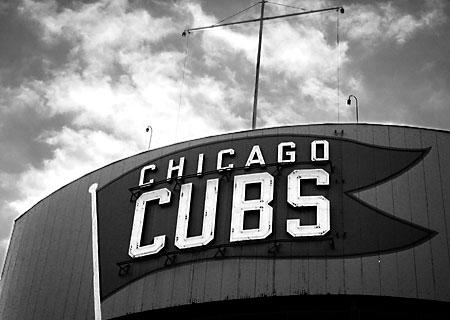
i have been writing on serious topics recently, but i hope you don't feel like the cubbies aren't very serious. the cubbies are _very_ serious.
; )
this year has been especially sad for cubs fans. while i know there are really truly serious things happening, sometimes i like to just read about the cubbies. your diversion is supposed to be lots of fun, though. what happens when your hobby becomes sad?
what happened this year? many people think dusty baker is the most serious problem. i do think that dusty has made some strange choices, but i don't think he is the major reason the cubbies have struggled so much.
1) corey patterson
2) left field
3) softies
4) missing!
5) dustyball
6) backline relief pitching
7) don't be defensive!
1) corey patterson
some have started to say that losing sammy sosa and moises alou are the largest reasons why the 2005 cubs have performed so poorly. left field has certainly been disappointing, but center field has been the crazy blow. the composite stats for leadoff hitter and center field are last in the major leagues!
corey's performance has certainly been a much bigger drag on the cubs offense than missing sammy . . . in 2004, corey hit 266 with a .322 OBP. he had 24 HRs, 74 RBIs, and 32 SBs. in 2005, corey's has hit .222 with a .260 OBP! he has only 12 HRs, 28 RBIs, and 14 SBs. he also has only 19 BBs, vs 45 in 2004.
3) soft offensive numbers
the problem is not really batting average or power offensive statistics. the cubs team has a higher batting average this year (.274 v. .269), and is ranked 2nd in the national league in home runs (164). it's in the softer details. . . the cubs rank last (16th) in BBs, 9th in SBs, and 9th in OBP. moises alou and sammy sosa certainly did not increase SB's, and burnitz will match sosa in BB's.
our hitters have poor approaches. they swing too early in the count. first, opposing pitchers are able to work deeper into games. we know how important this is because our pitchers consistently have high pitch counts. when pitchers have high pitch counts, they are less effective. second, starting pitchers with high pitch counts are pulled for relief pitching. relief pitchers are dramatically less effective than starting pitchers. third, when hitters work good counts, they also receive better pitches to hit. better pitches obviously translate to more basehits, but better counts also enable hitters to hit for team goals like advancing baserunners. fourth, increased walks are increased baserunners which lead to increased runs scored.
4) missing consistent 5th starter
injuries to starters did not hurt us _that_ much more this year than last year. . . mark prior and kerry wood each had serious injuries last year that caused them to miss significant starts. while wood has started 12 less games this year, he only started 22 games last year. and, prior figures to have 5 more starts this year than last year at a lower ERA (3.72 v. 4.02).
i think the major missing piece was a consistent 5th starter. matt clement has 181 innings at 3.68 ERA (2nd on staff last year, would be 2nd on staff this year). then, the replacements for woody and prior last year were dramatically better. i really mean that glendon rusch was dramatically better.
5) dustyball
dusty has made some really poor choices this year. some of these choices make more sense short term (taxing starters without backline bullpen health), but some were bad (moving productive hitters lower in the lineup (michael barrett at 8? todd walker at 6?), some disappointing (avoiding young players, even in a consistent rotation), and some really horrible (corey and neifi in the 1 and 2 spot).
i like dusty, but he's definitely on the list. i heard one poster speak about bad years. sometimes, really good players have really bad years. i imagine that dusty will have a great 2006. he sounds motivated and already on point. but, what happened this year?
6) the backline bullpen
the major pieces of the bullpen haven't been that bad. . . will ohman has been great as a left handed specialist, michael wuertz did have a great first half (before being worn down), and roberto novoa has continued to improve. while latroy hawkins' numbers really were pretty good last year, there's no doubt that ryan dempster has been more effective as a closer.
i think the major difference is the backline relievers . . . remlinger went into a severe tailspin, and we were not able to find strong middle or secondary relievers. jon leicester and cliff bartosh flamed out early, scott williamson flamed out late, and joe borowski couldn't get it together on time. where were you, jermaine van buren? why did you destroy chad fox, dusty?
ahhhhh!
Subscribe to:
Posts (Atom)